A Commentary on The ICJ Croatia v. Serbia Genocide Case (part I): Some thoughts on an Anti-Climatic Result

On 3 February 2015, the ICJ issued its Judgment in the Genocide claim and counter-claim between Serbia and Croatia and rejected both. Essentially, while finding evidence of the actus reus of genocide (murder, bolidy harm, etc.), directed at croats or serbs, the ICJ could not find evidence of genocidal intent, i.e, the specific intent to destroy in whole or in part a particular group.

As said by Marko Milanovic (here and here) there was no real doubt as to what the final conclusion of the court would be. I think that overall, this case was a complete waste of time and energy and, as astutely noted by Janet Anderson, “Maybe, in the end, only the lawyers win cases like this.”

This being said, reading through the judgment, I noted a number of points I found of interest. I will also devote a separate post to Judge Cancado Trindade’s dissenting opinion which will be posted later.

  • The use of ICTY Practice and case law

Hearing the summary of the Judgment and reading it afterwards, it is striking to note how much it is essentially a digest of ICTY case law, as was the 2007 genocide Judgment in the Bosnia case. This is of course not surprising, as the ICTY has just spent 20+ years documenting this conflict and the commission of crimes during it and making findings on these in lengthy judgments. It would be weird if the ICJ did not take notice of this. Beyond this, two specific points struck me in the Judgment.

First of all, it interesting to note how the ICJ took into account the ICTY Prosecutor’s charging policy, more particularly the fact that he has not charged genocide for a number of senior officials (such as Milosevic) in relation to events in Croatia. Following the logic of the 2007 Genocide judgment, the Court said that this could be taken into consideration, while acknowledging that his was not not necessarily decisive proof that there had not been genocide (Judgment, §187).

This makes sense to me on the face of it. Indeed, the higher up the officials the more link there is between claims of individual responsibility and considerations of state policy that are relevant for the determination of state responsibility. To the extent that one takes the view that charging policy is first and foremost a logical decision guided by available evidence, one can therefore see the logic of the claim that no genocide charge equals no evidence of genocide.

However, Croatia does have a point when it said that charging policy is guided by many other factors than availability of evidence (judgment, §185), for example expediency, the existence of a plea bargain from the accused, or simple preference. The Lubanga case at the ICC comes to mind in that respect, where the decision not to charge anything else than the use of child soldiers says nothing about the availability of evidence in relation to other crimes (such as sexual violence), as the trial process painfully showed. I therefore think that before attributing any weight to a decision not to charge, there needs to be a broader evaluation of the charging practice of the Prosecutor of a given tribunal. In this sense, I think that the ICJ was far more justified in attributing weight to the ICTY Prosecutor’s decision, given the often “everything but the kitchen sink” approach adopted there, than it would have been if it had done the same with the ICC, given the sometimes apparently random or inomplete choices made in relation to charging.

Second of all, there is a discussion on the weight to be given to decisions of different chambers of the ICTY. More particularly, are Trial Chamber decisions more persuasive than Appeal Chamber decisions? This question was important for Serbia’s counter-claim because it obviously wished to rely on the Gotovina et al. Trial Judgment rather that the contested Appeals Judgment which acquitted everyone. Serbia’s reasoning in that respect was the following:

Serbia argued that the findings of an ICTY Appeals Chamber should not necessarily be accorded more weight than those of a Trial Chamber. Indeed, according to Serbia, the members of the Appeals Chamber are appointed at random and vary from one case to another, so that they have no greater experience or authority than those of the Trial Chamber having ruled on the same case. Serbia argues that the main difference between the two benches appears to be that the former consists of five judges, whilst the latter is composed of three judges. Moreover, the decision of the Trial Chamber was unanimous when it convicted Gotovina and Markač, whereas the Appeals Chamber reached its decision to acquit them by a majority of three against two. Serbia points out that, overall, the majority of the judges having sat in the Gotovina case were of the view that the Croatian forces did engage in indiscriminate shelling of the four above-mentioned Krajina towns.

This reasoning was not accepted by the ICJ, the judges considering that:

Irrespective of the manner in which the members of the Appeals Chamber are chosen— a matter on which it is not for the Court to pronounce — the latter’s decisions represent the last word of the ICTY on the cases before it when one of the parties has chosen to appeal from the Trial Chamber’s Judgment. Accordingly, the Court cannot treat the findings and determinations of the Trial Chamber as being on an equal footing with those of the Appeals Chamber. In cases of disagreement, it is bound to accord greater weight to what the Appeals Chamber Judgment says, while ultimately retaining the power to decide the issues before it on the facts and the law.

I must admit that I am of two minds here. From an institutional point of view, the ICJ is right to say that the final word on an issue for the ICTY (taken as a whole) has to logically be the Appeal Judgment. However, the ICJ is not following what the ICTY, as an institution, has to say about something, but rather reading individual decisions produced by the institution in order to help assess the facts. As a result, what should be relevant is whether a particular decision is convincing or not, irrespective of whether it was overturned on appeal, based on standard of proof and evidence which are anyway not relevant for the ICJ’s purposes. In this sense, Serbia’s point on the fact that a majority of equally professional ICTY judges who dealt with the Gotovina case agreed that there was a violation of IHL somewhat more useful than the ICJ thinks it is, because it could, from a probative point of view, tip the balance towards the facts being sufficiently established for the purposes of ICJ litigation.

  • The link between IHL and the Genocide Convention

One question which arose during the proceedings is the link between International Humanitarian Law and the Genocide Convention. More particularly, both Serbia and Croatia seem to have argued that acts which would be legal under IHL could not be considered as acts that would constitute the actus reus of genocide (Judgment, §152). In response to this, the ICJ refused to “rule, in general or in abstract terms, on the relationship between the Convention and international humanitarian law” (§153).

However, later in the Judgment, the ICJ notes that the legality of the shelling of certain Serbian villages by Croatian forces during Operation Storm meant that there was not the required mental element to establish killing as one of the actus reus of genocide (Judgment, §474-475). In this particular case, I think this makes sense: if the willful targetting of civilians is not established under IHL, this means that there is no intent to kill necessary for a particular killing to be considered n actus reus of genocide.

More generally however, I’ve always felt unease at claims that all bodies of law can apply in all contexts (Human Rights Law, IHL, ICL, etc…) and within ICL, that particular acts can be charges as several crimes at the same time (genocide, Crimes against humanity and war crimes) and that individuals can even be convicted cumulatively in that respect. Of course, I can see how technically this would work: if you have a “checklist approach”, you can easily see how one act could in theory tick all the boxes of the elements of different crimes. The problem is that for me, a crime (and probably even more an international crime) is a particular story or narrative, and more importantly in a particular context. The contextual element of the crime tells us the story that conditions our view of the particular acts. If there is a situation of armed conflict and a particular act is linked to that conflict, I think that analysis should prevail over the other legal qualifications.  This does not mean that other crimes (CaH and genocide) could not be committed in an armed conflict. It just means that different particular acts could not fall under the different categories.

  • Enforced disappearances as genocide?

A third area where the ICJ seems to have made some interesting statements is in relation to the link between enforced dissapearances and genocide. Indeed, Croatia claimed that “causing serious mental harm to members of the groups” includes (judgment, §159):

the psychological suffering caused to their surviving relatives by the disappearance of members of the group. [Croatia] thus argues that Article II (b) has been  the subject of a continuing breach in the present case, since insufficient action has been initiated by Serbia to ascertain the fate of individuals having disappeared during the events cited in support of the principal claim.

In response to this, the ICJ said that:

In the Court’s view, the persistent refusal of the competent authorities to provide relatives of individuals who disappeared in the context of an alleged genocide with information in their possession, which would enable the relatives to establish with certainty whether those individuals are dead, and if so, how they died, is capable of causing psychological suffering. The Court concludes, however, that, to fall within Article II (b) of the Convention, the harm resulting from that suffering must be such as to contribute to the physical or biological destruction of the group, in whole or in part.

The Court therefore seems to accept, on principle, Croatia’s argument, even if later on in the Judgment it rejects the application to the present case because Croatia failed to provide any evidence of psychological suffering sufficient to constitute serious mental harm within the meaning of the Genocide Convention (§356). For a more lengthy discussion on the idea, see Judge Cancado Trindade’s dissent (§§296-320). To my knowledge, this is the first time I see this argument mentioned and it is an intriguing one.

To be honest, I find this finding somewhat disturbing, because it not only opens the door to a broadened view of the actus reus of genocide, but more importantly, it imports the notion of “continuing crime” in the genocide question. Indeed, accepting enforced dissapearance as a material element of genocide, even indirectly through the “mental harm” category, means that as long as individuals are not told of the fate of their relatives, the crime (here genocide) could be considered to be ongoing. This would as a result trump any temporal considerations in the application of the genocide convention. Last year, in an article on the Armenian Genocide and the ICC, I rejected the idea of genocide as a continuing crime simply based on the fact that the later generations would still be suffering the consequences of the genocide. By that standard, all crimes could be deemed to be continuing crimes, which makes no sense. The enforced dissapearance approach is a somewhat more subtle version of that which I have my doubts about for exactly the same reasons.

  • Applying Monetary Gold to extinct States?

Finally, moving away from ICL, I was intrigued by Serbia’s claim that the Monetary Gold principle would preclude the Court from making any findind in relation to the now extinct SFRY. Indeed, the Monetary Gold principle, in a nutshell, means that the ICJ cannot make findings in a judgment that might have an impact on the responsibility of another state not present in the proceedings.

I’ve always had my doubts on the exact scope of this principle, but in any case, it certainly does not apply for states which no longer exists because, as put by the ICJ, such state “no longer possesses any rights and is incapable of giving or withholding consent to the jurisdiction of the Court” (§116). If such a an argument were to be accepted, it would mean that no successor state would ever be able to be held responsible for conduct of the preceding State, which is not, as far as I know, the current state of international law today.

  • A concluding thought on the content of the judgment

While the judgment is arguably of reasonable length, one can wonder whether it could not have been much shorter. Indeed, given the finding that the mental element of genocide (specific intent) was absent, what was the legal relevance of spending such a large chunk of the judgment on listing the crimes that were committed? I can see why the ICJ did it of course, it gives the symboblic impression of addressing some of the concerns of the victims, by documenting their suffering, even when rejecting all the claims. But one can wonder whether this is the role of the ICJ from a judicial point of view.

Which brings me to my next post, a critique of some aspects of Judge Cancado Trindade’s dissent, which will follow shortly…
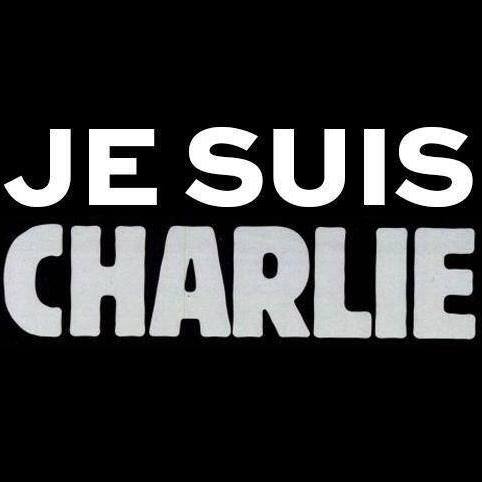
We are not all Charlie: why the biggest threat to freedom of expression might come from within democracies

Putting aside the usual “they had it coming” comments that have flourished on twitter and facebook, since Tuesday, I am reading reports that a number of media outlets are deciding not to show Charlie Hebdo cartoons. This seems to be the case for CNN for example, which circulated an internal memo to that effect, and Associated Press which apparently removed Charlie Hebdo cartoons from its database.

I called this reaction “sad and cowardly” on twitter yesterday, but I suppose that faced with such barbaric act of violence, I should show some understanding for the decision of these journalists who might fear for their lives. Not everybody has the courage of Charb, the editor in chief of Charlie Hebdo, who claimed to prefer to die standing than on his knees.

The problem is that fear, which is at the end of the day a natural human reaction, is not the the justification that is always put forward. This is from the CNN memo:

Although we are not at this time showing the Charlie Hebdo cartoons of the Prophet considered offensive by many Muslims, platforms are encouraged to verbally describe the cartoons in detail. This is key to understanding the nature of the attack on the magazine and the tension between free expression and respect for religion.

In my initial reaction to the attack in Paris against Charlie Hebdo cartoonists, I claimed rather harshly that the idea one finds in human rights discourse that offense or disrespect of religion are legitimate limitations of free speech was conceptually also responsible for what happened in Paris. The CNN memo illustrates this point by putting in the same balance free speech and respect for religion.

However, there is no right to be respected in my view, either for individuals, and even less for religions. As noted by Salman Rushdie in his message of support to Charlie Hebdo, “‘Respect for religion’ has become a code phrase meaning ‘fear of religion.’ Religions, like all other ideas, deserve criticism, satire, and, yes, our fearless disrespect.” Freedom of expression  and respect for religion, or any idea, should not therefore never be put on the same level.

Of course, some people have told me that my focus on freedom of expression is too intellectual and beside the point in response the the senseless violence that the murderers used. It is a language that they cannot start to understand.

I agree. There are some people with whom dialogue is impossible and there is no sense in invoking against them certain values, because values, contrary to the universalist ideology, imply a shared social contract, a sense of wanting to live together within the same community (vivre ensemble, in French).

This was brilliantly captured by Charb in a 2012 editorial in Charlie Hebdo:

Peins un Mahomet glorieux, tu meurs.
Dessine un Mahomet rigolo, tu meurs.
Gribouille un Mahomet ignoble, tu meurs.
Réalise un film de merde sur Mahomet, tu meurs.
Tu résistes à la terreur religieuse, tu meurs.
Tu lèches le cul aux intégristes, tu meurs.
Prends un obscurantiste pour un abruti, tu meurs.
Essaie de débattre avec un obscurantiste, tu meurs.
Il n’y a rien à négocier avec les fascistes.

[translation: Paint a glorious Muhammad , you die. Draw a funny Muhammad, you die. Scribble an ignoble Muhammad , you die. Make a crappy movie about Muhammad , you die. Resist religious zealots , you die. Lick the ass the fundamentalists , you die. Take an obscurantist for a fool , you die. Try to debate with an obscurantist , you die. There is nothing to negotiate with fascists.]

My point is very different. I am not trying to convince extremists to agree with me. They probably never will, as our views of the world and of a shared community are radically opposed.

My point is addressed at those within our democracies who try to limit free expression every day under the guise of human rights, respect or human dignity. I believe that freedom of expression is non negotiable full stop, whether with fascists or anyone else. Yet, I wonder how many of the people who are supporting Charlie Hebdo today are truly supporting freedom of expression.

Indeed, the same people who are marching in the street today, often also think that voices should be silenced through laws which vaguely define “incitement to racial hatred” or want Parliaments to legislate on history through laws prohibiting denial of certain events or crimes. Of course, they would claim that these examples are very different. What transpires from interviews done with people attending the marches in Paris is that, Charlie Hebdo cartoonists are defended because they are perceived as progressive left-wingers. Whereas the likes of Dieudonné, a controversial French humorist, perceived as an antisemite, should not be allowed to do his shows. It is also the same people who would refuse that the Front National, a legally recognized French party, not participate in the general march in support of Charlie Hebdo because it is not ‘republican’ enough. It is the same people who denounce the racist caricatures of far-right newspaper Minute.

Do they not see the paradox there? Marching in the street seemingly denouncing any attack on freedom of expression while at the same time denying that the others should be allowed to express themselves… Freedom of expression is a question of principle which should not depend on the content of the expression, in the same way that the protection of the rights of the accused in international tribunals should not depend on the perception of guilt, or the our moral reaction to the horrendous nature of the crimes. I defend Charlie Hebdo cartoonists in the same way I would defend Dieudonné or Garaudy, a French holocaust denier (or his English equivalent, David Irving): because whatever they say, they should have a right to say it in a democratic society. I wonder how many people, if these shootings had taken place at Minute, would now be wearing a T-shirt with “I am Minute” on it.

In that respect I am profoundly intellectually opposed to the phrasing of of Article 10(2) of the ECHR which provides that:

The exercise of [freedom of expression], since it carries with it duties and responsibilities, may be subject to such formalities, conditions, restrictions or penalties as are prescribed by law and are necessary in a democratic society

For me, a truly democratic society should not need to limit freedom of expression. It should be solid enough in its foundations to accept even the most radical opinions, however outrageous or disrespectful they are.

The problem is that too many people  have accepted this intellectual dictatorship that seeks to impose what we should think about everything and the ensuing limitations to our freedom of expression.

I see this every year in my human rights classes, where I always take freedom of expression as a case study. I do this because I realized that this seems to be the fundamental freedom, in appearance applauded throughout the world as shown by the overwhelming support for Charlie Hebdo, where students are willing to accept limitations on the basis of various moral, religious or other grounds without any further reflection. This is not the case for other freedoms, such as the prohibition of torture for example, because they create easily digestible dichotomies between perpetrator and victim, where there is no real debate whose side to be on. You are on the side of the victim, therefore you agree with the prohibition of torture. Easy. Freedom of expression is something else, because the victims are seen not as those protected by the right, but those affected by the exercise of the right by someone else. So by naturally siding with the victim, we have to disagree with the exercise of the right to freedom of expression. And it is all downhill from there.

Some would claim that the conduct of the media outlets mentioned previously shows, as the phrase goes, that “the terrorists win”. Sadly, I think the situation is far worse than that. Because of our easy acceptance of limitations to freedom of expression in our societies, we have already, despite our most sincere claims to the contrary, started to erode, slowly but surely, this most fundamental freedom that is free speech. What’s worse therefore than the terrorists winning? The fact that we don’t seem to have needed the terrorists in the first place…

I conclude with this beautiful quote from French humorist Pierre Desproges, who practiced his art at a time when you could be caustic without being sued and who would cry if he woke up in France today:

S’il est vrai que l’humour est la politesse du désespoir, s’il est vrai que le rire, sacrilège blasphématoire que les bigots de toutes les chapelles taxent de vulgarité et de mauvais goût, s’il est vrai que ce rire-là peut parfois désacraliser la bêtise, exorciser les chagrins véritables et fustiger les angoisses mortelles, alors oui, on peut rire de tout, on doit rire de tout.

[translation (francophone readers will have to forgive me for this crude translation of Desproges. His mastery of the French language make it quite hard to translate): If it is true that humour is the politeness of despair, if it is true that laughter, blasphemous sacrilege that bigots of all the creeds denounce as vulgarity and bad taste, if it is true that that laughter can sometimes desacralize stupidity, exorcise the real sorrows and castigate mortal anguishes, then yes, one can laugh about everything, one must laugh about everything.]

“I am Charlie”: defending freedom of expression after French Cartoonists killed

je suis charlie

“I am strong, I will hurt them with my words” (My 3 year old son, when being told what happened in France today)

This post is not about cold legal analysis, or even about law. It will not be particularly structured or elaborate. It is an expression of shock and anger at what happened in Paris today.

Two armed men entered the most famous French satirical newspaper, Charlie Hebdo and shot a dozen people before escaping. Apparently, the two men claim to do this in the name of Islam. The attack led to the death of four of the most famous French cartoonists (Wolinski, Tignous, Cabu and Charb, the editor in chief of the newspaper). These individuals represented freedom of expression in France and were known for fighting those who opposed this principle, whatever their creed and religion. These cartoonists helped me grow up intellectually throughout my youth and shaped my capacity for critical thought. They taught me that intellectual freedom and freedom of expression are the most important values and that words are the sharpest weapons.

France, the birthplace of Voltaire, is in shock today.

Charlie Hebdo had taken a stand in 2006 when it decided to reproduce the famous caricatures of Mohamed that had initially been published in a Danish newspaper and sparked tensions throughout the world.

It is the protection of freedom of expression which led me to start this blog nearly five years ago. My second post was to denounce a resolution from the UN Human Rights Council on the “defamation of religion”. The UN should not be held hostage or be complicit to such theories.

My one and only belief is in freedom of expression. Continue reading

Are all crimes committed in Palestine between 2002 and 2014 now beyond the reach of the ICC? Possibly.

I wish all the readers of this blog a very happy New Year and thank you for your support over the years. Do not hesitate to spread the word about spreading the jam!

The new year started with a bang: Palestine has decided to join the International Criminal Court (ICC). It seems unavoidable to write about the issue and there have been a flurry of commentaries in the past week (more particularly see the great overviews from David Luban at Just Security and Amanda Taub at Vox) which comprehensively cover a number of legal issues that arise now and are likely to arise in the future. I won’t re-hash these issues now, as there will be ample time to do so when (if) the time comes.

The one point I want to focus on here is the question of Palestine’s retroactive acceptance of jurisdiction back to last summer.  Indeed, in addition to joining the ICC (which, on principle, only has prospective effect as per Article 11(2) of the Rome Statute), Palestine also lodged a declaration under Article 12(3) accepting the Court’s jurisdiction back to the 13 June 2014, in order to cover last summer’s war in Gaza.

This raises the interesting question of whether Palestine can actually do this and whether this falls within the parameters of both Article 12(3) and 11(2). Continue reading

Guest Post: A Matter of Distinction Part II: participation of children in hostilities following the Lubanga Appeal Judgment

[I’m delighted to welcome Catherine Harwood again with her thoughts on the recent Lubanga Judgment’s take on active participation in hostilities]

  • Introduction

On 1 December 2014, the Appeals Chamber of the International Criminal Court dismissed Mr Lubanga’s appeals against conviction and sentence. Mr Lubanga had been convicted of the war crimes of enlisting and conscripting of children under the age of fifteen years and “using them to participate actively in hostilities” under Article 8(2)(e)(vii) of the Rome Statute, and was sentenced to 14 years imprisonment.

Mr Lubanga’s grounds of appeal included that the Trial Chamber had misconstrued the concept of ‘active participation in hostilities’ in Article 8(2)(e)(vii). In a previous post I discussed his appeal and supported the distinction made by the Chamber between ‘active participation’ in Article 8(2)(e)(vii) and other manifestations of ‘active’ or ‘direct’ participation in hostilities in international humanitarian law (IHL). I cautioned against the adoption of a unitary concept, writing that it was preferable to retain this distinction in light of the drafting history and purpose of Article 8(2)(e)(vii). I argued in favour of a bifurcated approach “in order to discourage the use of children in roles that place them in harm’s way, while also preserving their status as protected persons until they participate directly in hostilities.”

This contribution follows up on that post, after the delivery of the Appeal Judgment. In upholding the  conviction and sentence, the Appeals Chamber endorsed the distinction between ‘active participation’ in Article 8(2)(e)(vii) and the notion of ‘direct participation in hostilities’. However, it concluded that the Trial Chamber had erred in its interpretation of ‘active participation’. This contribution argues that despite some elements of ambiguity, the Appeals Chamber’s ‘link to combat’ approach is workable and appropriately connected to the underlying protective purpose of the prohibition. Continue reading